

What we told 100+ CIOs in Atlanta about getting AI digital workers into production and keeping them there.
Eleven percent. That's how much AI work reaches permanent production deployment, and Christopher Belford says the number hasn't moved in three years.
Christopher, Associate Partner at EPI-USE Services for AWS, closed day two of the CIO Leadership Summit in Atlanta with a keynote on why. His answer wasn't about models, data quality, or tooling. It was about ownership.
"The blocker is not the model," he told the room. Data access, integration, identity, and guardrails all matter. But the bigger gap is organizational: nobody has been assigned to run the thing once it's built.
The largest internship program in corporate history
Christopher opened with a job posting for "Agent 47," a fictional applicant who's available 24/7, speaks dozens of languages, costs nothing but compute, and never takes PTO. The catch: he sometimes makes things up with total confidence, and he's read every document in the company, authorized or not.
The joke lands because the pattern is familiar. Christopher cited an MIT poll of 1,261 managers: one in three companies already frames AI agents as employees, and 23% list them on the org chart. [CONFIRM source and link] Yet few of those agents convert from pilot to permanent. In his words, it's the largest internship program in corporate history: huge intake, boundless enthusiasm, almost nobody hired full time.
Why the hiring metaphor helps, and where it hurts
Christopher was careful here. He doesn't argue that agents are coworkers. He argues that the discipline of hiring is useful.
The label itself carries a risk. He cited research showing reviewers caught 18% fewer errors when they believed work came from an "AI employee" rather than a chatbot, and escalations rose 44% as people blamed the software and passed responsibility up. [CONFIRM source and link for both figures]
The fix is to borrow the controls, not the title:
- A named owner, not a steering committee. One person answers for the output.
- A written scope, not an open-ended pilot. Say what the system does, and what it must never do.
- Explicit limits and circuit breakers. Stop conditions, approval boundaries, and escalation routes.
- A review date and evidence. Accuracy, cost, human effort, and failures, measured.
He also warned against the obvious shortcut of putting people between the AI and every decision. Humans are poor at repetitive approve-or-reject work — it's why we automated it in the first place. Decide what rules, references, and thresholds can check, and save human judgment for what needs it.
Three hires, three levels of governance
Christopher framed AI systems as three kinds of hire. The level of autonomy sets how much governance you need.

The intern: extraction from unstructured data. Between 70% and 90% of enterprise data sits in PDFs, email, spreadsheets, and images. Lightweight machine learning can read it far more like a person than traditional OCR (the "temp agency of the 2000s," as he put it). It's cheap, proven, and often overlooked in the rush toward agents. You can check its work against source documents and master data using rules and code, not armies of reviewers. One example from the field: a bank used lightweight ML to pull relevant clauses from contracts and saved 360,000 hours. [CONFIRM whether this example can be attributed]
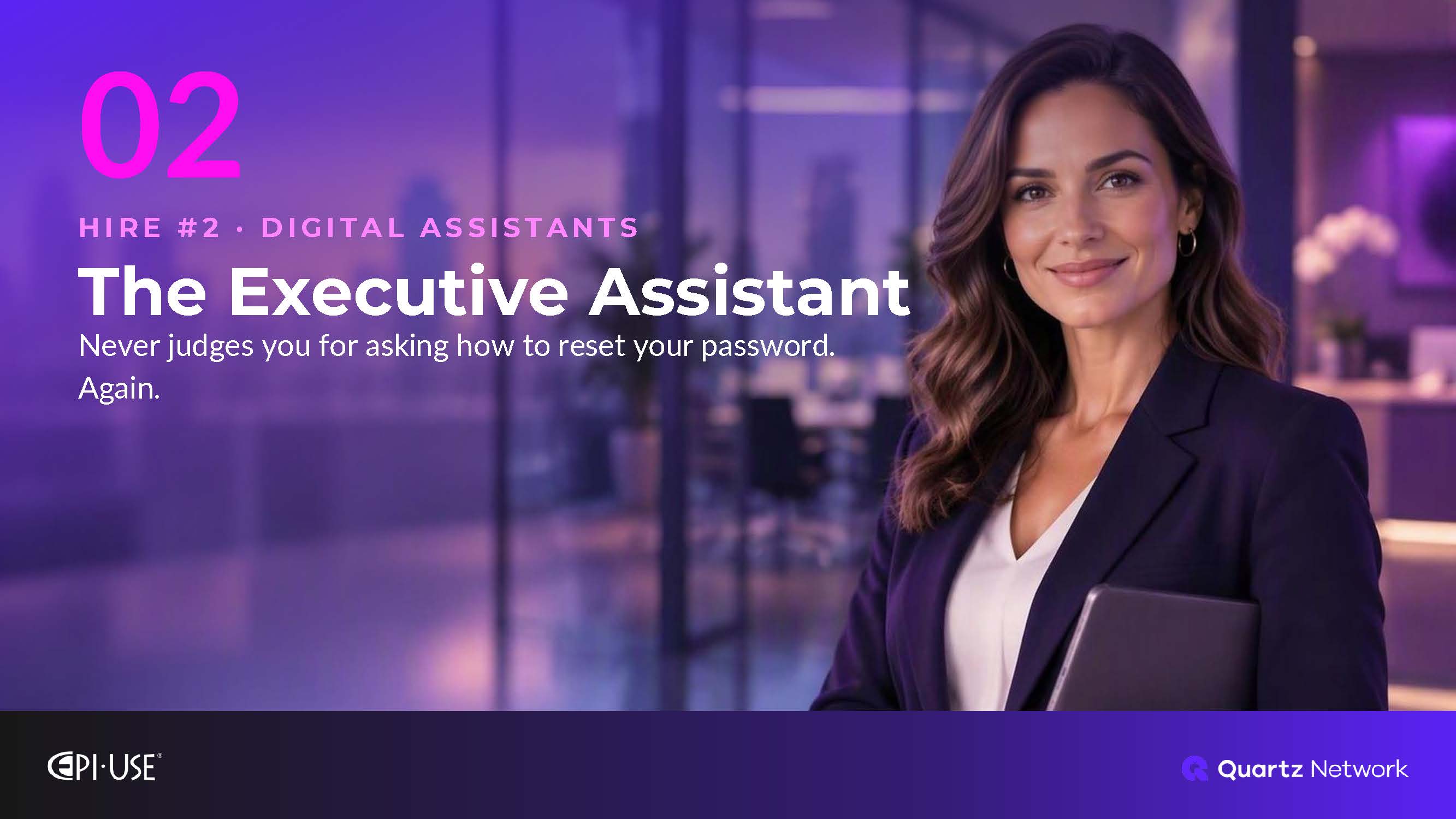
The assistant: answers with access risk. Once the interface is conversational, the challenge shifts from intelligence to access. An assistant asked "What is everyone in finance doing?" that surfaces a compensation spreadsheet has done exactly what its permissions allowed — and that's the problem. Run assistants under a person's identity, not a shared service account. Ground answers in references, and reward an honest "I don't know." Then review the questions it couldn't answer, because they show what your company never wrote down. In one enterprise search case covering 100,000 hard-to-find documents, success moved from 20% to 80%. Christopher credited a tightly defined use case with a specific result. [CONFIRM attribution]
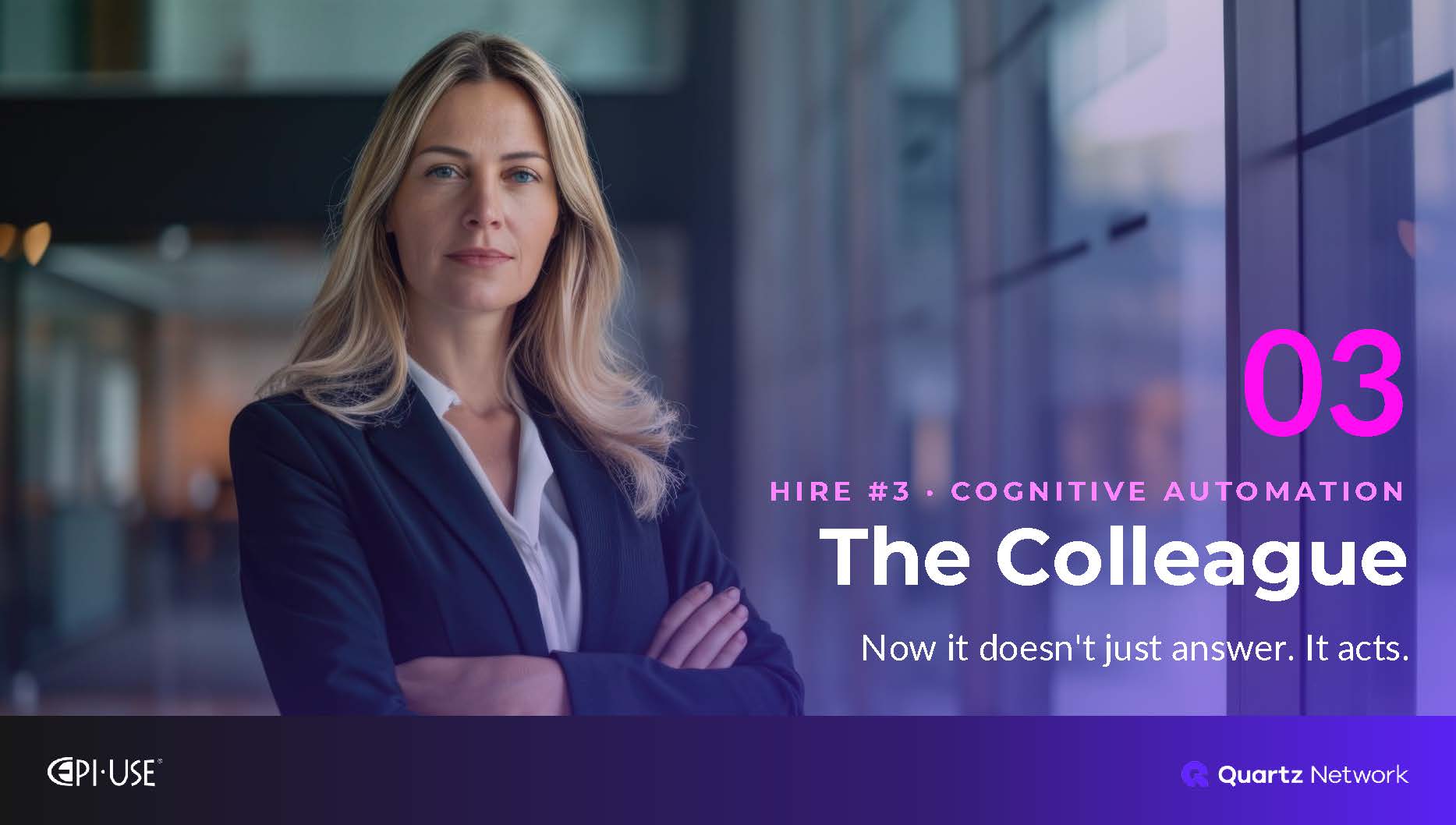
The colleague: decisions in mission-critical workflows. This is where agents act, not just advise. They must live inside the controls you already have: approval limits, segregation of duties, escalation paths, and audit trails. Solving for downtime is a familiar problem. With agentic AI, you also have to solve for wrong decisions. One pattern Christopher sees working in enterprises is a larger model that proposes and a smaller, cheaper model that adjudicates, with an invariant gate enforcing non-negotiable rules and clear paths to abstain and escalate. Not every use case needs the full harness. Applying it to low-risk work is expensive and unnecessary, but mission-critical automation needs all of it.
The people leg
The session was framed as a three-legged stool: systems, work, and people. Most roadmaps cover the first two. The third is where Christopher sees organizations furthest behind.
A production-ready digital worker needs what a new hire needs: a laptop and badge (identity and credentials), an NDA (data boundaries), a precise job description, onboarding, ongoing performance reviews, and a manager. Enterprise ERP systems are precise because they've been refined over decades. An agent won't deliver comparable value without an equally specific job spec.
And ownership can't sit in the gap between business and IT. Business asks IT to "start using AI." IT asks, "For what?" Something gets built, and nobody owns it. In the Q&A, Christopher added that HR is part of the answer but not the whole of it. Everyone involved in deploying a digital worker is responsible for some aspect of it.
His reframe for the audience: stop asking "Can AI do X?" Ask whether you can give it the context, the tooling, and precise instructions to do the job. If you can, then AI can do X.
What to do on Monday
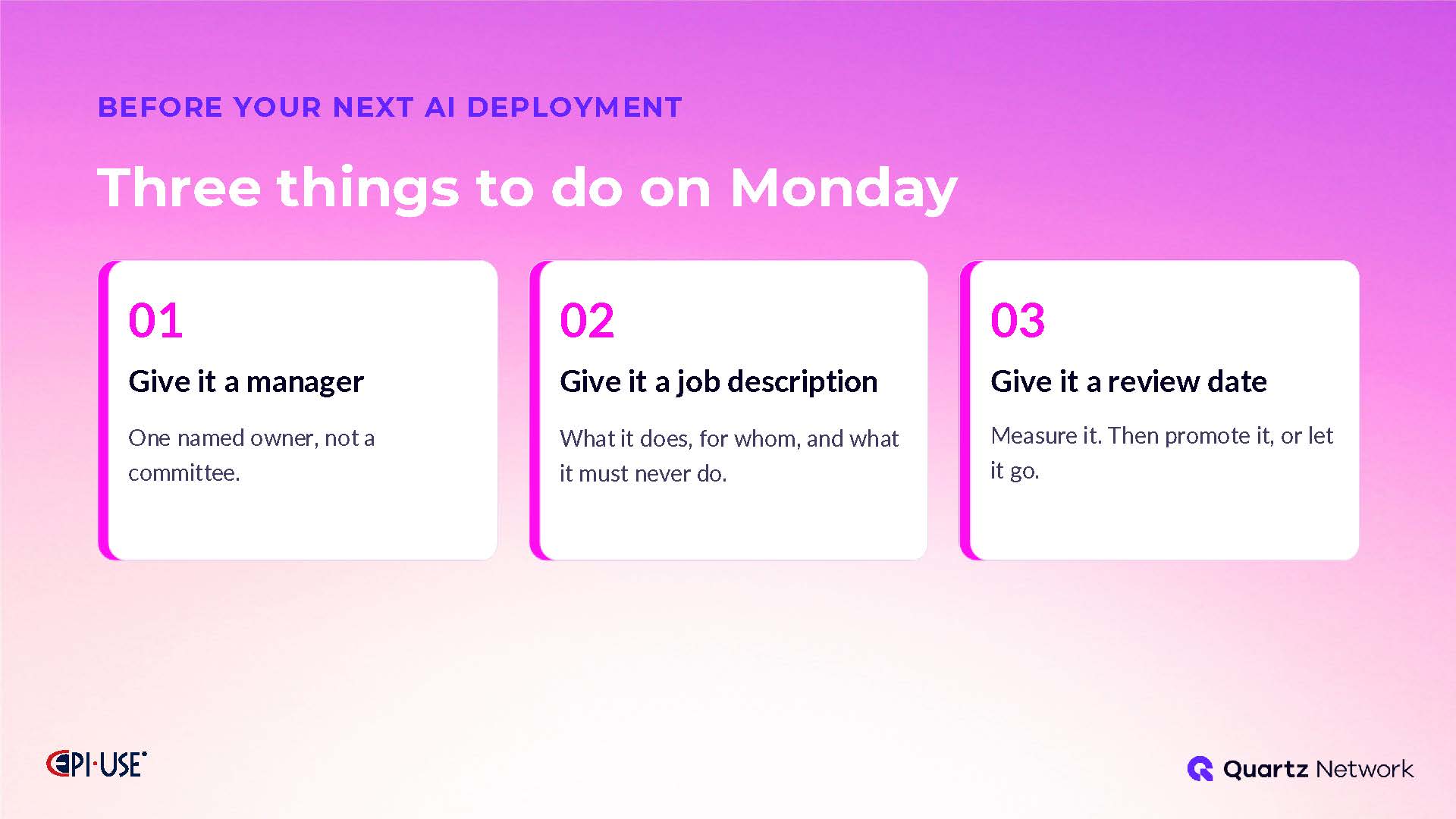
Christopher closed with four actions any CIO can take this week:
- Give Agent 47 a named manager, not a committee.
- Write the job description, including what it will never be allowed to do.
- Set a review date.
- Measure performance, then consider a promotion.
Agent 47's own performance review, for the record: exemplary attendance, abundant initiative (not a compliment), 94% accuracy on the fields measured, and no data on the rest. Not recommended for promotion.
Where to start
If you're deciding which of your AI initiatives are ready for production, and who should own them, our team can help you map each one to the right level of governance. Talk to a Cloud Expert at EPI-USE Services for AWS.